UPCOMING:
an installation by
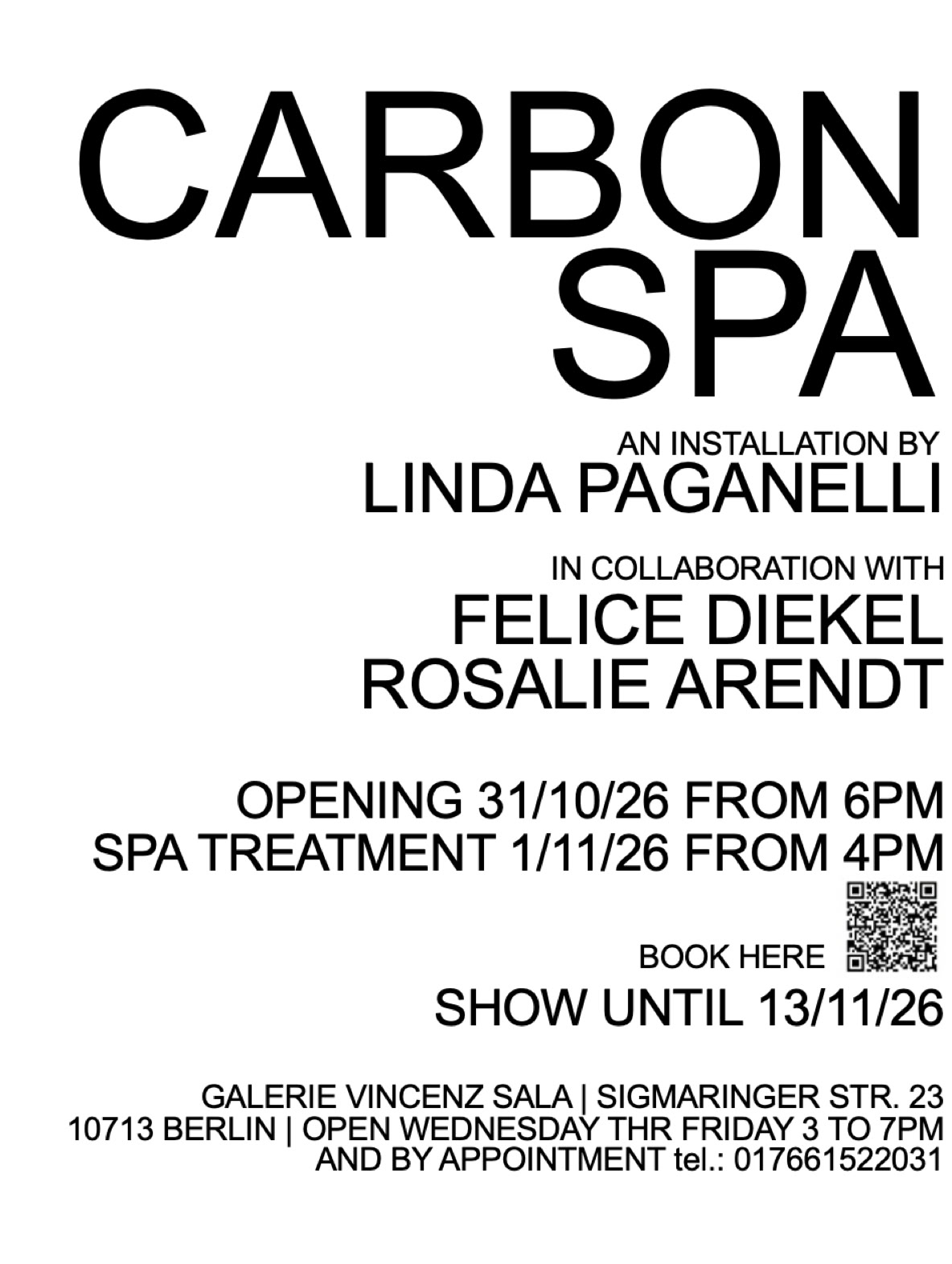
LINDA PAGANELLI
In collaboration with
FELICE DIEKEL and
ROSALIE ARENDT
OPENING 31 OCTOBER FROM 6PM
SHOW UNTIL 13 NOVEMBER
Sigmaringer Str.23 | 10713 Berlin
zur Ausstellung:
„Carbon Spa“ ist eine künstlerische Installation. Sie ist das Ergebnis einer Zusammenarbeit zwischen Wissenschaft und Kunst, die im Sommer 2025 begonnen hat. Das Projekt entstand durch einen kontinuierlichen Austausch in Form von Gesprächen, Telefonaten, gemeinsamer Textarbeit und Exkursionen der Künstlerin Linda Paganelli sowie der Wissenschaftlerinnen Felice Diekel (Doktorandin) und Rosalie Arendt (Assistenzprofessorin) an der Universität Twente.
Die Zusammenarbeit baut auf der Forschung von Felice und Rosalie zu CO₂-Kompensationsprojekten und Klimapolitik aus einer sozial-ökologischen Systemperspektive auf. Mit Fokus auf ein CO₂-Projekt zur Wiedervernässung von Mooren in Brandenburg untersuchen sie, wie CO₂-Kompensationsmechanismen komplexe sozial-ökologische Beziehungen oft auf quantifizierbare CO₂-Leistungen reduzieren. Indem sie die kontextbezogenen Wechselwirkungen und die Geschichte des Ortes berücksichtigen, versuchen sie, die Unsicherheit, Komplexität und die fortwährende gegenseitige Konstitution sozial-ökologischer Beziehungen in den Vordergrund zu rücken, die durch vereinfachte Kompensationsansätze verschleiert werden.
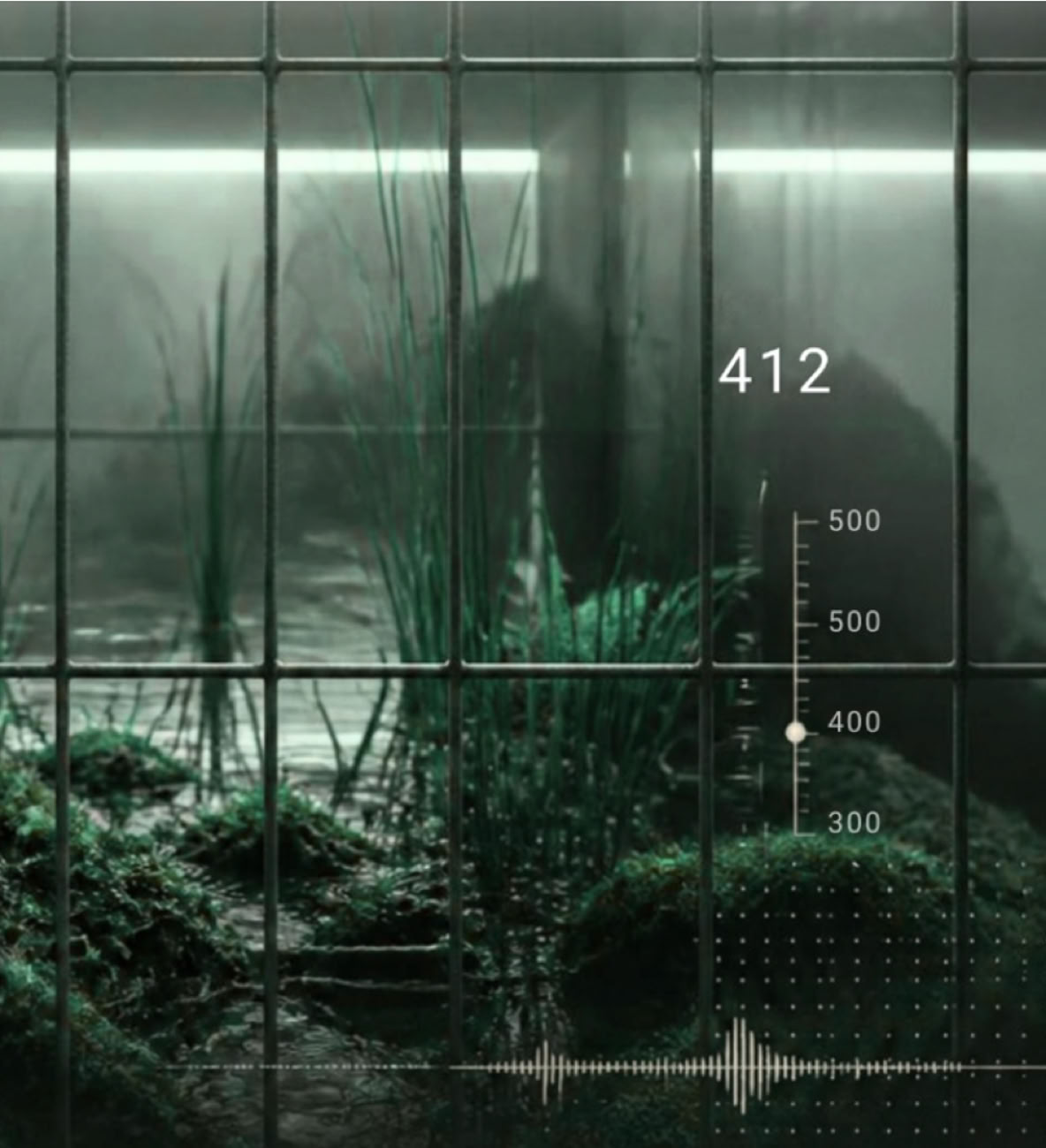
Die Ausstellung bei Vincenz Sala folgte auf einen ersten Austausch zwischen Rosalie und der Galerie, deren Offenheit für experimentelle künstlerische Praktiken einen passenden Kontext für die Installation bietet. Obwohl „Carbon Spa“ gemeinsam entwickelt wurde, hat es sich zu einem eigenständigen künstlerischen Werk entwickelt, das sich kritisch mit den Versprechungen und Widersprüchen zeitgenössischer klimapolitischer Instrumente auseinandersetzt. Die Installation lässt die Besucher*innen in eine manipulierte, eingeschlossene Moorumgebung* eintauchen, in der ökologische Fürsorge und Extraktivismus aufeinanderprallen. Sie veranschaulicht so die komplexen und oft ambivalenten Realitäten von Umweltinterventionen.**
Dabei regt Carbon Spa zum Nachdenken über die affektiven und materiellen Beziehungen an, die die Interaktion des Menschen mit der Umwelt prägen. Es ermutigt die Besucher*innen, ihre eigenen Verflechtungen mit ökologischen Systemen sowie mit den marktorientierten und technologischen Lösungen zu reflektieren, die im Namen des Umweltschutzes zunehmend vorangetrieben werden.
BEGLEITETE SPA-BEHANDLUNG
Sonntag, 1. November, 16:00–18:30 Uhr
Eine betreute Spa-Sitzung mit unseren hauseigenen Wissenschaftlerinnen und unserer hauseigenen Künstlerin. Wir führen Sie durch die Fallstudie, bieten Ihnen einen Moment des Wohlbefindens und begleiten Sie in eine mehr-als-menschliche Perspektive.
Die Plätze für die geführte Spa-Behandlung sind begrenzt. Buchen Sie Ihren Termin hier:
VOR IHRER BEHANDLUNG
Sie könnten schmutzig werden. Handtücher sind nicht erforderlich. Sie können gerne Ihre Gummistiefel mitbringen; alternativ stehen auch Schuhüberzüge zur Verfügung.
*Das Moor ist komplett künstlich.
**Für diese Ausstellung wurde der Natur kein Schaden zugefügt.
on the show:
Carbon Spa is the artistic outcome of a science-art collaboration initiated in the summer of 2025. The project emerged through an ongoing exchange of conversations, calls, shared writing, and site visits between artist Linda Paganelli and researchers Felice Diekel (PhD candidate) and Rosalie Arendt (Assistant Professor) at the University of Twente.
The collaboration builds on Felice's and Rosalie's research into carbon offsetting projects and climate policy from a social-ecological systems perspective. Focusing on a peatland rewetting carbon project in Brandenburg, the research examines how carbon offsetting mechanisms often reduce complex social-ecological relations to quantifiable carbon benefits. By attending to the situated interactions and histories of the site, it seeks to foreground the uncertainty, complexity, and ongoing co-constitution of social-ecological relations that such approaches can obscure.
The presentation at Vincenz Sala followed an initial exchange between Rosalie and the gallery, whose openness to experimental artistic practices provided a fitting context for the work. While developed collaboratively, Carbon Spa has evolved into an artistic work of its own, critically engaging with the promises and contradictions of contemporary climate solutions. Immersing visitors in an altered, enclosed wetland* environment where ecological care and extractivism collide, the installation evokes the complex and often ambivalent realities of environmental intervention**.
In doing so, Carbon Spa invites reflection on the affective and material relations that shape human engagements with the environment. It encourages visitors to consider their own entanglements with ecological systems and with the market-based and technological solutions increasingly advanced in the name of environmental protection.
GUIDED TREATMENTS Sunday 1 November, 4:00 pm – 6:30 pm
A supervised session with our resident scientists and our resident artist. They will walk you through the case study, offer a moment of wellness, and accompany you into a more-than-human dimension.
Places for the Guided Treatment are limited. Book your appointment here.
BEFORE YOUR TREATMENT
You may get dirty. No towels required. Feel free to bring your rain boots, though shoe covers are provided.
*The peatland is entirely fake.
**No nature was harmed in the making of this exhibition.

